
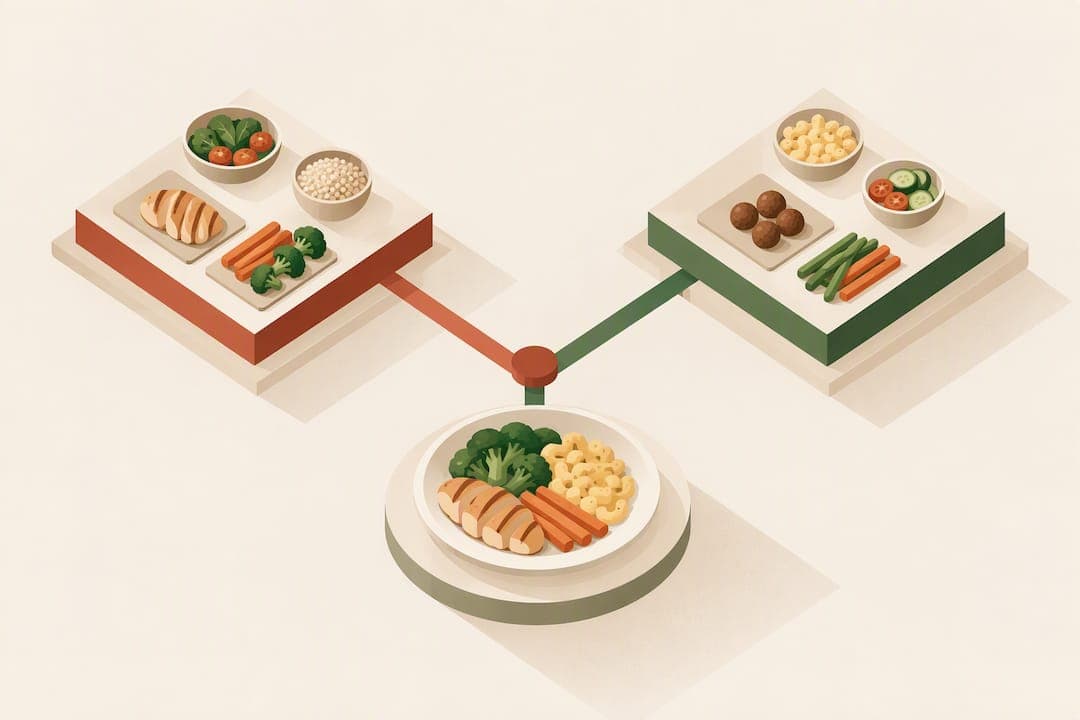
The most effective meal-planning approach for picky eaters combines a predictable meal and snack schedule with low-pressure repeated exposure, pairing one familiar food with one small new item at every meal. Most kids need several weeks of this pattern before a new food gets accepted, sometimes more than a dozen tries. Watch for red flags like stalled growth or a diet under 20 foods, which call for professional support. A recipe organizer or shopping-list app can make the whole routine easier to repeat night after night.
TL;DR:
- Consistent meal and snack schedules, with hunger naturally built through fixed timing, increase the likelihood of picky eaters trying new foods over time.
- Reusing core ingredients across meals, such as cheese, ground beef, and tortillas, reduces shopping complexity and reinforces food exposures.
- Repeated exposure to new foods, including touch and smell, is essential, often requiring 13 or more encounters for acceptance, especially under low-pressure conditions.
- Simple, batch-cooked meal plans focusing on familiar foods with small weekly variations help maintain routine and support gradual food acceptance.
- Using a recipe organization app simplifies planning, repeats proven meals effortlessly, and helps track foods already accepted to build a stable rotation.
Table of Contents
- Quick Meal-Planning Checklist for Picky Eaters
- Two Ready-to-Use Sample Meal Plans You Can Copy This Week
- Practical Meal-Planning Strategies Backed by Feeding Science
- Recipe Ideas, Swaps, and Preparation Hacks Families Actually Use
- Planning Lunches and Snacks for Picky Eaters
- Troubleshooting: Red Flags and Next Steps When Picky Eating Is Severe
- How a Recipe-Organizing App Can Simplify Planning and Repeat Exposure
- Author Perspective: Small Wins and Realistic Expectations
- Optional Tool: Organize Your Family's "What Works" Recipes
- Authoritative Resources to Learn More
- Sources
- FAQ
Quick Meal-Planning Checklist for Picky Eaters
Good meal planning for picky eaters isn't about finding the perfect recipe. It's about building a system you can run on autopilot during a Tuesday night meltdown. This checklist gives you the structural pieces first, then the shortcuts that make it sustainable.
Set the schedule before you set the menu. Fixed meal and snack windows, roughly every 2.5 to 3.5 hours, keep kids from grazing all day and arriving at dinner with zero appetite. Structured meal and snack timing is one of the few tactics that consistently improves willingness to try new foods, because a genuinely hungry kid is a more curious kid.
Once the schedule is set, build every plate around the same simple formula:
- One or two safe foods your child already eats without a fight
- One small, low-pressure new exposure, a few bites, not a full portion
- A starch or grain that fills the plate without becoming a battleground
- A protein source served the same way it was last time it worked
From there, the weekly workflow matters more than any single recipe:
- Pick three to four dinners that share at least two ingredients (a rotisserie chicken that becomes tacos, then soup, then a grain bowl).
- Write your shopping list directly from that rotation instead of shopping first and planning later.
- Batch-cook a protein and a grain on Sunday so weeknight "cooking" is really just assembly.
- Keep two backup meals in the freezer for the nights nothing goes according to plan.
Sheet-pan dinners, one-pot pastas, and a rotisserie chicken you break down three different ways are the workhorses here. They cut prep time without cutting corners on the familiar-plus-new structure your child needs at every meal.
Pro Tip: Keep a running list on your phone of the exact foods and preparations your child has accepted, even once. That list becomes your safe-food bank for fast weeknight planning, and it stops you from relying on memory during a hungry, cranky 5 p.m.
Two Ready-to-Use Sample Meal Plans You Can Copy This Week
Some weeks call for a plan you can execute half-asleep. Other weeks, you have the bandwidth to build real variety. Here are both.
The overwhelmed-parent survival plan
This plan assumes you have five minutes, a freezer, and low expectations for yourself. Every meal uses pantry or freezer staples and requires close to zero decision-making.
- Breakfast (every day): Plain oatmeal or scrambled eggs, whichever is already a safe food, with frozen fruit on the side, untouched or blended in, your call.
- Lunch: Quesadillas with shredded cheese (add a spoonful of beans as the "new" element on day one) or a deli-meat and cracker plate.
- Dinner: Rotate between frozen meatballs with pasta, sheet-pan chicken nuggets with frozen peas on the side, and scrambled eggs with toast.
- Snacks: Cheese sticks, applesauce pouches, and crackers, kept in the same bin so kids can serve themselves.
Nothing here needs a recipe. The entire plan runs on repetition, and repetition is the point when you're barely keeping the household running.
The 5-day balanced plan
This version still leans on familiar anchors but builds in a specific new exposure every night, plus a shopping list that reuses ingredients across the week to keep your grocery bill and your prep time in check.
| Day | Familiar anchor | Small new exposure | Shared ingredient |
|---|---|---|---|
| Monday | Buttered noodles | Roasted broccoli florets on the side (not mixed in) | Parmesan cheese |
| Tuesday | Grilled cheese | Sliced cucumber with ranch for dipping | Cheddar cheese |
| Wednesday | Taco night (ground beef, cheese, tortilla) | One black bean added to the beef mix | Ground beef, shredded cheese |
| Thursday | Baked chicken tenders | Roasted sweet potato wedges | Chicken, sweet potato |
| Friday | Homemade pizza (cheese only, kid builds their own) | Diced bell pepper as a topping option, not required | Shredded cheese, tortilla-turned-crust option |
Shopping list for the week: ground beef, chicken breast or tenders, shredded cheddar, shredded parmesan, tortillas, egg noodles or pasta, bread, black beans (one can), broccoli, cucumber, sweet potato, bell pepper, ranch dressing, pizza sauce.
Notice how cheese, ground beef, and tortillas each show up in at least two dinners. That overlap isn't an accident. Reusing core ingredients across the week cuts your shopping complexity and makes it far more likely you'll actually repeat the exposures that matter, rather than abandoning the plan by Wednesday because you ran out of one obscure ingredient.
Swaps for the most common dislikes
If broccoli is a hard no, swap in roasted carrots or green beans, still roasted, since the caramelized edges read as "crispy" rather than "mushy vegetable" to a lot of kids. If ground beef is rejected outright, shredded rotisserie chicken slides into the taco slot without changing anything else on the list. If cheese is the safe food carrying the whole week, that's fine. Let it do the work; you can widen the rotation later once a few of these new exposures start landing.

The goal with both plans isn't variety for its own sake. It's building a rotation you can run on repeat for a month, tweaking one exposure at a time, instead of reinventing dinner from scratch every single night.
Practical Meal-Planning Strategies Backed by Feeding Science
Meal planning for picky eaters works better when it's built on how appetite and food acceptance actually function, not on willpower or bribery.
Repeated exposure is the single most-cited tactic in feeding research, and it's also the most misunderstood. Parents often give up after two or three rejected attempts, assuming a food is a permanent no. But Healthychildren to a new food before they'll accept it, and that exposure doesn't have to mean eating it. Touching it, smelling it, or watching a parent eat it with visible enjoyment all count toward the total.
Roughly 1 in 3 to 10 in 100 kids develop feeding problems that persist beyond typical picky phases, which is exactly why the structural tactics below matter more than any single dinner.
Scheduling meals and snacks does real work here too. If a child is nibbling crackers at 3 p.m., 4 p.m., and 4:45 p.m., dinner at 5:30 has no chance. Fixed meal and snack windows let hunger build naturally, which makes a child more receptive to trying something unfamiliar, not less.
The division of responsibility framework simplifies the whole dynamic:
- The caregiver decides what food is offered, when it's offered, and where it's eaten.
- The child decides whether to eat it, and how much.
- Neither side should try to control the other's job.
That division rules out a few tactics that feel intuitive but tend to backfire. Bribing with dessert ("three bites and you get ice cream") teaches kids that the vegetable is a chore to survive, not a food worth liking. Pressuring a child to finish a plate overrides their own hunger signals, which research on responsive feeding consistently flags as counterproductive. And hiding vegetables in sauces or blending them into foods a child thinks are "safe" can undermine trust once discovered, and it does nothing to build actual comfort with the food's real appearance or texture. Structured, coached approaches to exposure consistently outperform ad hoc pressure tactics in outcomes for kids with genuine food selectivity.
Recipe Ideas, Swaps, and Preparation Hacks Families Actually Use
You don't need new recipes so much as new formats for the recipes already working in your house.
- Build-your-own bowls. Set out rice or noodles, a protein, and three toppings in separate piles rather than one mixed dish. A child who refuses "stir-fry" will often eat the exact same ingredients when they're allowed to assemble the plate themselves.
- Deconstructed versions of foods they already reject. If tacos as a wrapped unit get refused, serve the same beef, cheese, and tortilla as separate components on a plate. Same ingredients, dramatically lower pressure.
- Five-ingredient dinner templates. Protein plus starch plus one vegetable plus one sauce plus one garnish covers most weeknight dinners without requiring a new recipe every time, just a new combination of the same five slots.
- Textural swaps for the same vegetable. A child who won't touch steamed broccoli might eat it roasted until the edges crisp, or raw with ranch. Texture, not flavor, is usually the actual objection, so change the cooking method before assuming the food itself is the problem.
- Dips as a bridge. Ranch, hummus, ketchup, and yogurt-based sauces lower the stakes on a new food dramatically. A raw pepper strip is a much smaller ask when it comes with something familiar to dip it in.
Pro Tip: Before you swap an ingredient, swap the cooking method first. The same sweet potato that gets rejected mashed often gets accepted roasted into fries, because crisp edges read as a completely different food to a lot of picky eaters, even though the ingredient never changed.
Presentation matters more than most parents expect. Cutting a sandwich into triangles instead of squares, serving components in a divided plate instead of a mixed bowl, or plating a new food in a small dish next to (not touching) the familiar food all reduce the sense that mealtime is a negotiation. None of these require cooking skill. They require five extra minutes of setup, which is a much smaller ask on a Tuesday than a brand-new recipe.

Planning Lunches and Snacks for Picky Eaters
Lunches and snacks are where a lot of the daily food battle actually gets decided, since a kid who's snacked all afternoon has no reason to try anything new at dinner.
Pair a protein with a fiber source at every snack and lunch. That combination, recommended in general nutrition planning guidance, keeps kids fuller longer than a carb-only snack, which cuts down on the grazing that wrecks appetite before dinner. Cheese and crackers, hummus and pretzels, or turkey roll-ups with apple slices all fit this pattern.
- Bento-style lunches work well because each compartment holds one small, separate item; kids can pick their own order and nothing touches anything else.
- Rotate three or four lunch combos on a two-week cycle instead of inventing a new lunch daily. Predictability lowers resistance, and rotation keeps it from getting stale.
- Prep snack packs in batches on Sunday, portioning crackers, cut fruit, and cheese into small containers so grabbing a snack doesn't turn into a 4 p.m. negotiation.
- Flag allergy-aware swaps early (sunflower seed butter instead of peanut butter, for instance) so a school-safe lunch doesn't become a separate planning project every week.
A snack schedule that runs on a two-hour rhythm, not constant access to the pantry, protects the appetite you're trying to build for dinner.
Troubleshooting: Red Flags and Next Steps When Picky Eating Is Severe
Most picky eating is developmentally normal and peaks between ages 2 and 4, with plenty of kids who seem impossibly selective still eating 30 or more different foods across a given month. Genuine feeding disorders look different, and it's worth knowing the line.
Watch for these signals:
- A diet restricted to fewer than 20 total foods, especially if entire food groups or textures are eliminated entirely.
- Poor weight gain, stalled growth, or a pediatrician flagging a drop on the growth curve.
- Severe gagging, choking, or vomiting at the sight or smell of non-preferred foods.
- Mealtimes that consistently disrupt the whole family, daily tears, extreme rigidity, or a child who won't eat anywhere outside the home.
A minority of children develop feeding problems that persist beyond a normal picky phase, according to Feeding Matters, and these cases typically need more than meal-plan adjustments.
A pediatric evaluation for suspected ARFID or a broader pediatric feeding disorder usually starts with growth monitoring and a nutrient check, then may expand into multidisciplinary care involving a feeding therapist, a dietitian, and sometimes an occupational therapist for sensory-based aversions. While you're pursuing that evaluation, keep offering a broad multivitamin if your pediatrician approves one, keep the safe foods flowing so total intake doesn't drop further, and hold off on introducing multiple new challenges at once. Stabilizing nutrition matters more than expanding the food list during this window.
How a Recipe-Organizing App Can Simplify Planning and Repeat Exposure
The tactics above only work if you can actually repeat them, week after week, without reinventing the plan from memory every Sunday night. That's a logistics problem as much as a feeding one.
A practical workflow looks like this:
- Save your family's "safe" recipes as you find them, from a text message, a screenshot, or a recipe blog, into one place instead of scattered across five apps.
- Tag each one by texture, protein, or ingredient so you can quickly pull up "crispy vegetable sides" or "recipes with black beans" when you're planning next week's small exposure.
- Build a rotating weekly plan from those tagged recipes instead of starting from a blank page.
- Generate a shopping list automatically from that plan, so the ingredient-reuse strategy from the sample meal plans happens without manual list-building.
- Use a guided cook mode with built-in timers when you're juggling dinner prep and a kitchen table full of opinions.
Some recipe apps offer organization features such as saving recipes from links and screenshots, generating shopping lists from your plan, and providing a cook mode with timers to help with meal preparation. The point isn't to have a new recipe every night. It's making the recipes that already work easy enough to repeat that you actually do.
Author Perspective: Small Wins and Realistic Expectations
Mealtime stress is exhausting in a way that's hard to explain to anyone who hasn't lived it, the dread of another rejected plate, the guilt of wondering if you're doing lasting damage. You're not. Most picky eating resolves with time, patience, and the unglamorous repetition of offering the same food a dozen times without much visible progress.
If I could get parents to change one habit tonight, it would be this: stop measuring success by what gets eaten and start measuring it by what gets tried. A single bite of a rejected vegetable, spat out and complained about, still counts as an exposure. Track exposures in a note on your phone instead of watching the plate at the end of the meal. The plate will lie to you about progress far more often than a running tally will.
Small, boring wins compound. A kid who tolerates broccoli on the plate this month might taste it next month and actually eat it by spring. That timeline feels impossibly slow at 6 p.m. on a hard night, but it's also exactly how most of this resolves.
— Nathan
Optional Tool: Organize Your Family's "What Works" Recipes
Recipe apps can help run the meal-planning system described above without the mental overhead of remembering which recipe worked, where you found it, or what the shopping list needs this week. Users can save recipes from links, screenshots, or notes into one organized library, tag safe foods and small exposures, and use the app to create a ready-made shopping list.
It's an optional layer on top of the strategies in this article, not a replacement for them. If you're already juggling a hungry toddler, a rotisserie chicken, and three half-eaten dinners a week, having one place to store what actually works cuts down the friction that makes meal planning collapse by Wednesday. Some apps include a cooking mode that keeps timers running to help manage meal preparation efficiently. If that sounds like the missing piece in your week, try Zuppi and start building a rotation you can actually repeat.
Authoritative Resources to Learn More
A few sources are worth bookmarking, both for your own reading and for sharing with a pediatrician if you're pursuing an evaluation.
- Healthychildren, from the American Academy of Pediatrics, covers exposure strategies in more depth.
- Feeding Matters offers plain-language explanations of when picky eating crosses into a feeding disorder.
- The systematic review on ARFID management in pediatric practice is dense but useful to share directly with a clinician.
If you're worried your child's eating has moved past typical pickiness, start with your pediatrician for growth monitoring and a referral to a feeding specialist rather than trying to self-diagnose from an article, including this one.
Sources
- Healthychildren
- A Systematic Review to Manage Avoidant/Restrictive Food Intake Disorders in Pediatric Gastroenterological Practice - PMC
- The science of why your child is a fussy eater - The University of Sydney (news)
- Picky eating: Just a phase or cause for greater concern? - Feeding Matters
- Responsive feeding tool for home visitors - Head Start (US HHS)
FAQ
What is the 3-3-3 rule for meals?
There's no single clinical standard behind this term, but the version most parents use means offering 3 meals and up to 3 snacks a day on a fixed schedule, with each plate built from about 3 components: a familiar food, a starch, and one small new exposure. It's a memorable shorthand for the structure described throughout this article rather than an official feeding guideline.
What are the 5 P's of picky eating?
Definitions of this phrase vary across parenting sites, so there's no single agreed-upon list. The safest approach is to focus on the tactics with actual research behind them: predictable scheduling, patience through repeated exposure, and pairing familiar with new foods, all covered in the strategies section above.
Is picky eating part of ADHD?
Picky eating and ADHD can overlap, particularly when sensory sensitivities to texture or smell are involved, but picky eating on its own is not a symptom or diagnostic criterion of ADHD. Most picky eating is a typical developmental phase; if sensory issues seem to be driving extreme selectivity, a pediatrician can help determine whether a broader evaluation is warranted.
How do you meal prep for picky eaters?
Meal prep for picky eaters works best around a rotation of 3 to 4 dinners that share ingredients, batch-cooked proteins and grains, and a shopping list built directly from that rotation instead of assembled separately. Recipe management apps can store your family's proven recipes and auto-generate shopping lists, which keeps the prep repeatable week to week.
How long does it take for a picky eater to accept a new food?
There's no fixed timeline, but feeding guidance from HealthyChildren.org notes it can take 13 or more exposures before a child accepts an unfamiliar food. Progress usually shows up over several weeks of consistent, low-pressure offering rather than overnight.