
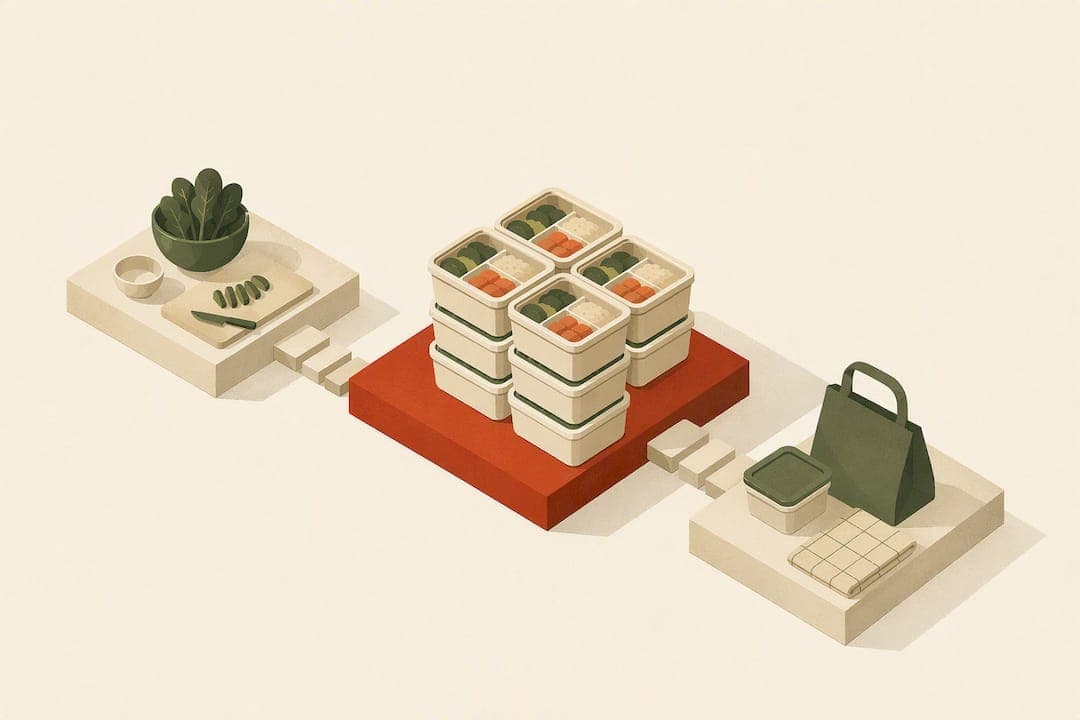
Meal prep for beginners comes down to one rule: pick a single mealtime and a single prep day, then build from there. Choose lunch or breakfast right now, pick two or three simple recipes, and put a recurring block on your calendar this week. Everything else, containers, storage timelines, sample menus, are details you can layer in once that first session is behind you.
TL;DR:
- Starting with two or three simple recipes for one mealtime and prepping for three to four days helps maintain freshness and reduce waste.
- Batch cooking or ingredient prep is recommended for beginners because it allows more flexibility and forgiving mistakes compared to full-meal portioning.
- Stocking the pantry with staples like rice, canned beans, frozen vegetables, and basic sauces can significantly cut prep time and simplify shopping.
- Using minimal equipment such as airtight containers, a sharp knife, and a digital scale makes meal prep more efficient and manageable for newcomers.
- Cooling food properly and sealing it in shallow containers ensures safety and extends the fridge life of prepped meals to three or four days.
Table of Contents
- What Is Meal Prep, and Which Style Fits You?
- Why Meal Prep Actually Pays Off
- How Do You Start Meal Prepping This Week?
- Batch Cooking vs. Ingredient Prep vs. Full Meals: Which Should You Try First?
- What Should Be in a Beginner Meal Prep Pantry?
- What Equipment Do You Actually Need?
- How Long Does Prepped Food Stay Safe to Eat?
- Two Starter Week Templates and Simple Recipes
- What Do You Do When Meals Get Boring or Time Runs Short?
- Where Meal Prep Habits Actually Break Down
- How Zuppi Simplifies Your First Few Weeks of Prep
- Sources
- FAQ
What Is Meal Prep, and Which Style Fits You?
Meal prep means cooking or organizing food ahead of time so weeknight decisions disappear. That's the whole concept. Where beginners get stuck is assuming it means cooking all 21 meals for the week in one long Sunday marathon. It doesn't have to.
Most approaches to meal prep fall into four categories, and each one solves a different problem.
- Full-meal prep: You cook complete dishes, portion them into containers, and reheat all week. Best for people who want to open the fridge and eat in 90 seconds flat.
- Ingredient prep: You wash, chop, and cook individual components (rice, roasted vegetables, grilled chicken) without assembling final dishes. Best if you like variety and want to mix components differently each night.
- Batch cooking: You make one large recipe (a soup, a chili, a stir-fry) in bulk and eat it across several days. Best for minimal decision-making and minimal cleanup.
- Freezer meals: You cook and freeze full meals or components for weeks or months out. Best for stocking a backup supply during busy stretches.
None of these is objectively superior. A student eating the same turkey chili four nights in a row wants full-meal prep. A parent juggling different kids' preferences wants ingredient prep, because it lets everyone build their own plate from the same base components. If you're brand new, batch cooking or ingredient prep tends to be the gentler entry point, since it forgives improvisation. You're not locked into one exact combination of flavors for five straight days.
Why Meal Prep Actually Pays Off
The payoff isn't abstract. It shows up in three concrete places: time, money, and how your body feels by Thursday.
On the time side, deciding what to eat is a decision you make anywhere from one to five times a day. Multiply that by seven days and you've spent a real chunk of mental energy just on "what now." Prepping removes most of those decisions in one sitting.
On the money side, a single takeout dinner for two often costs more than a week's worth of groceries for the same meal repeated. Cooking in bulk also means fewer wilted vegetables and forgotten leftovers, since you're buying with a specific plan instead of grabbing whatever looks good and hoping you use it.
Nutrition-wise, portioning meals ahead of time gives you built-in control over serving sizes, something almost impossible to manage consistently when you're deciding meals on the fly and hungry. A beginner-friendly meal prep approach also tends to naturally include more vegetables and lean proteins, simply because those hold up well across several days in the fridge.
Here's the practical shorthand worth remembering: prep two to four days at a time, not seven. That's the range health professionals point to for freshness and manageable batch sizes, and it avoids the burnout that kills most people's meal prep habit by week three.
How Do You Start Meal Prepping This Week?
Your first session should take under two hours, including shopping. Here's the sequence that keeps it that way.
- Pick one mealtime. Lunch and breakfast are the easiest starting points because they're usually repetitive already. Dinner has more variables (family preferences, timing, mood), so save it for later.
- Choose two or three simple recipes. Not five. Not a different dish for every day. Two or three recipes rotated across the week is plenty for week one.
- Scale the recipe to your household. If a recipe serves four and you're prepping for one person across four lunches, you're already set. If you're feeding a family, multiply ingredient quantities accordingly and double-check pan or pot sizes can handle the volume.
- Build a shopping list sorted by section. Split it into fridge (proteins, dairy, fresh produce), freezer (frozen vegetables, pre-cooked grains, proteins), and pantry (canned beans, oils, spices, grains). Shopping by section cuts wasted time wandering the store and reduces the chance you forget something.
- Shop once, with the list in hand. Resist the urge to add extra "just in case" items. Every extra ingredient is another thing to use or waste.
- Cook in parallel, not in sequence. Get a protein in the oven or on the stovetop, then use that hands-off time to chop vegetables, cook a grain, or wash produce for the next few days. This single habit is what separates a 45-minute session from a three-hour one.
- Cool food properly before sealing containers. Let cooked food sit for 10 to 15 minutes before sealing, and split large batches into shallow containers so heat escapes faster. Sealing hot food in a deep container traps steam, which raises the internal temperature and speeds up bacterial growth instead of slowing it.
- Portion into containers. Aim for consistent serving sizes so you're not guessing later. A kitchen scale helps here, but eyeballing is fine once you've calibrated a few times.
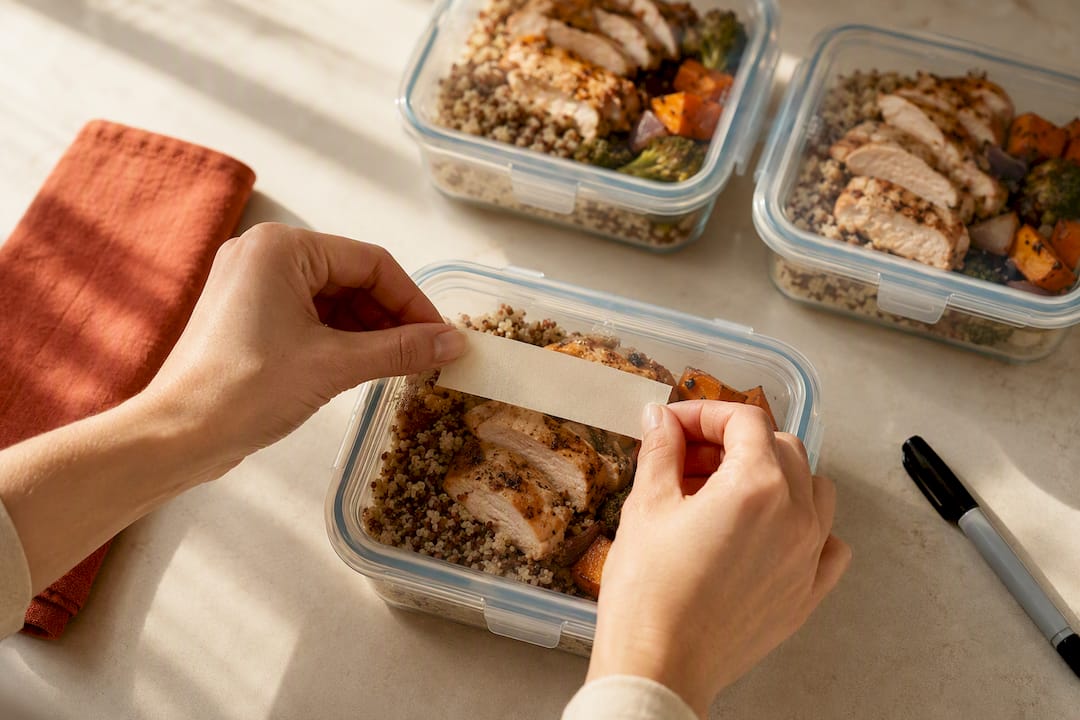
- Label everything with the dish name and date. This sounds like a small step, but it's the one beginners skip most often, and it's the one that prevents a mystery container of "something" from sitting untouched until it spoils.
- Rotate older containers to the front. This is First-In-First-Out, or FIFO, and it's a habit borrowed directly from commercial kitchens. Keep your oldest prepped meals at eye level in front of newer ones so nothing gets forgotten in the back of the fridge.
Pro Tip: Run your oven and stovetop at the same time from the start. Roasting vegetables while a pot of rice simmers and chicken sears in a pan means you're not waiting on one task before starting the next, and it's the single biggest reason experienced preppers finish in half the time beginners do.
Once you've run this sequence two or three times, the whole thing compresses. What takes two hours in week one often drops closer to 90 minutes of active work by week three, mostly because you stop second-guessing steps you've already practiced.
Batch Cooking vs. Ingredient Prep vs. Full Meals: Which Should You Try First?
Each meal prep style solves a slightly different problem, and picking the wrong one for your lifestyle is usually why people quit after two weeks.
- Batch cooking works best when you like eating the same core dish repeated with small variations, chili with different toppings, a big pot of soup, a tray of baked ziti. The upside is minimal decision-making and easy portioning. The downside is flavor fatigue if you don't rotate seasonings.
- Full-meal portioning means every container is a complete, ready-to-eat dish. It's the most convenient option on a busy week because there's zero assembly required. The tradeoff is less flexibility. If you decide Wednesday you don't want Tuesday's dish again, you're stuck or you're wasting food.
- Ingredient prep separates proteins, grains, and vegetables into their own containers so you assemble fresh combinations each meal. It takes slightly more effort at the point of eating, but it solves the boredom problem better than any other method, since the same three components can become five different-tasting meals depending on the sauce or seasoning you add.
- Freezer meals extend your prep timeline from days to weeks. They're ideal for building a backup stash for nights you know will be chaotic, but they require freezer space and slightly more planning around thaw times.
If this is genuinely your first attempt, start with batch cooking or ingredient prep rather than full-meal portioning. Both are more forgiving of mistakes: overcooked rice or slightly-too-salty chili is a smaller problem when it's one component of a flexible system, not a locked-in five-day commitment.
What Should Be in a Beginner Meal Prep Pantry?
A well-stocked pantry does more of the heavy lifting than people expect. When the right staples are already on hand, you need fewer specialty ingredients per session, which means faster shopping trips and fewer excuses to skip prep day altogether.
Keep these categories stocked at all times:
- Grains and starches: rice, quinoa, pasta, or pre-cooked microwave pouches for backup weeks.
- Canned or dried beans: chickpeas, black beans, and lentils add protein and fiber without needing to be cooked fresh every time.
- Frozen vegetables: they're pre-washed, pre-cut, and just as nutritious as fresh in most cases, which makes them a legitimate shortcut, not a compromise.
- Healthy oils and vinegars: olive oil, a neutral cooking oil, and a couple of vinegars cover most dressings and sauces you'll want to rotate.
- Sauces and seasoning bases: soy sauce, a curry paste, salsa, or a jarred pesto let you change the flavor profile of the same base ingredients without extra cooking.
On scaling: buy proteins and grains in quantities that match your prep window, not your optimism. If you're prepping for four lunches, buy enough protein for four lunches plus a small buffer, not a family-sized pack you'll be stuck portioning into freezer bags at 9 p.m.
Buying in bulk makes sense for shelf-stable staples like rice, oats, and canned goods, since they don't spoil and you'll use them eventually regardless of this week's exact menu. It makes less sense for fresh produce unless you have a specific plan to use the surplus before it turns.
Store-bought shortcuts, pre-washed greens, rotisserie chicken, pre-chopped stir-fry vegetables, are not cheating. They're a reasonable trade when your time is tighter than your budget, and using them on a hectic week is often the difference between prepping something and prepping nothing at all.
What Equipment Do You Actually Need?
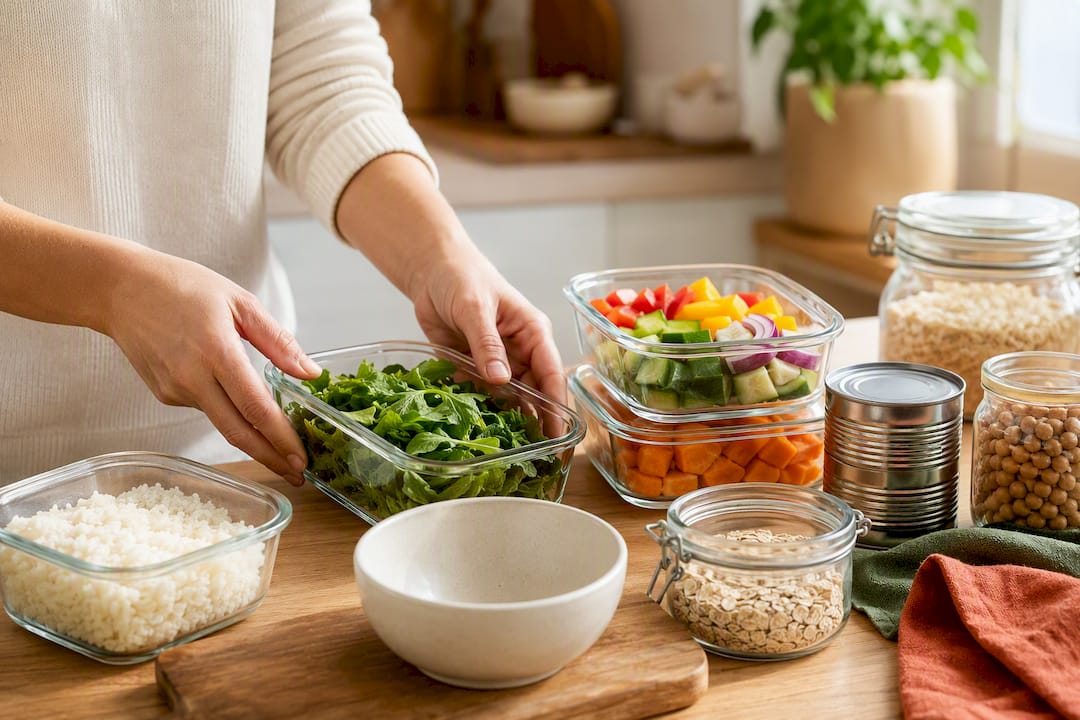
You don't need a fully outfitted kitchen to start. A minimal kit covers nearly everything a beginner needs for the first several months.
- Airtight containers, glass is worth the extra cost since it doesn't stain, doesn't hold odors, and can go from fridge to microwave without a second thought.
- A digital kitchen scale, useful if you care about consistent portions, though it's optional if you're comfortable eyeballing.
- A sharp chef's knife and a sturdy cutting board, dull knives are the number one reason chopping vegetables feels like a chore.
- An instant-read thermometer, this one matters more than people assume, since it's the only reliable way to confirm chicken, ground meat, or reheated leftovers have hit a safe internal temperature.
On container sizing, a 3-cup container works well for single lunch portions, sandwiches, salads, or a protein-and-side combo. A 5-cup container handles larger dinner portions or meals with more sauce and volume, like a stew or a grain bowl with extra toppings.
Pro Tip: Buy one container size to start, not a mismatched set of five. A uniform set stacks better in the fridge, and you'll waste less time hunting for the right lid.
Label each container the moment it's filled, dish name and date, using masking tape and a marker or a dry-erase label if your containers support it. It takes ten seconds and eliminates the guessing game three days later.
How Long Does Prepped Food Stay Safe to Eat?
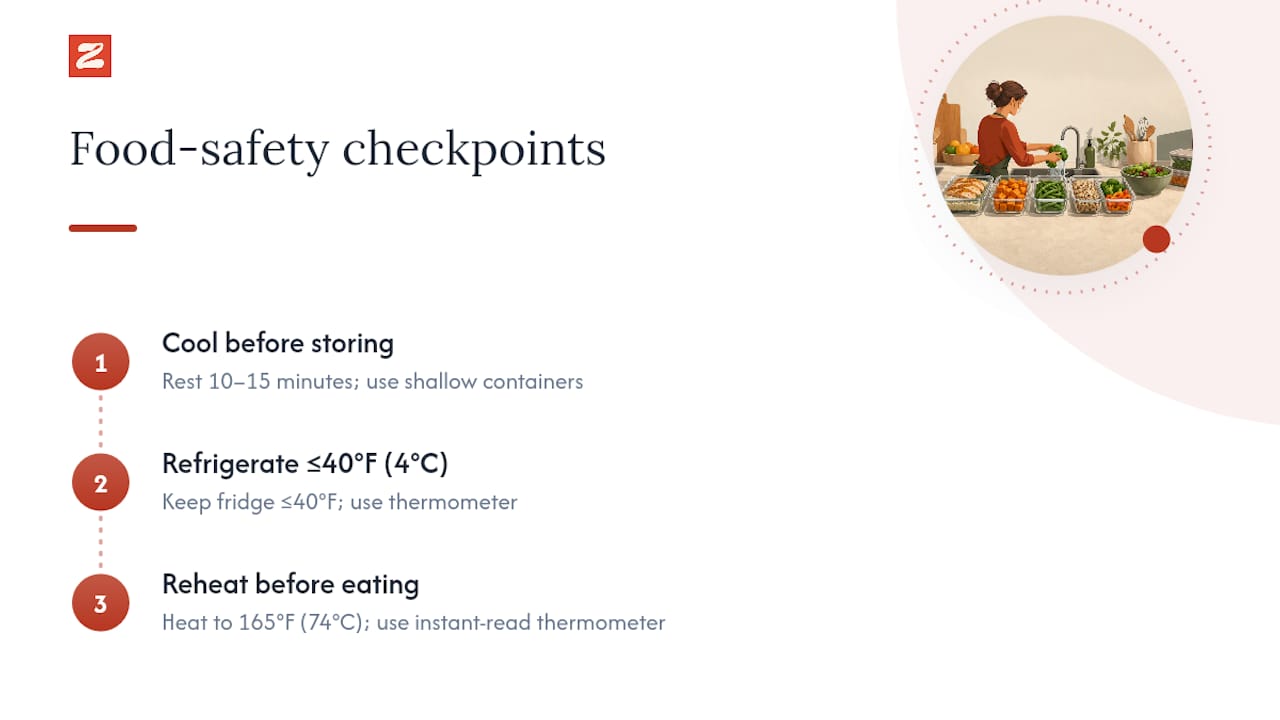
Cooling method matters as much as storage time. Cooked food should rest for 10 to 15 minutes before it goes into a sealed container, and large batches should be divided into shallow containers so heat dissipates quickly instead of staying trapped and warming everything around it.
Your refrigerator itself needs to hold 40°F (4°C) or below to keep bacterial growth in check. If you've never checked, an inexpensive fridge thermometer settles the question in seconds, most built-in dials are inaccurate by several degrees.
These ranges assume proper cooling and an airtight seal. Reheat cooked leftovers to an internal temperature of 165°F (74°C) whenever possible, and when in doubt about how long something has been sitting, an instant-read thermometer settles it faster than smell or appearance ever will.
Two Starter Week Templates and Simple Recipes
Decision fatigue is the biggest reason beginners abandon meal prep in the first two weeks, so start with a template instead of designing from scratch.
Template 1: Lunch-only, 4 days
- Sheet-pan chicken thighs with roasted broccoli and sweet potato, split across two containers.
- Grain bowl: quinoa base, roasted chickpeas, cucumber, and a lemon-tahini drizzle, split across two containers.
Template 2: Dinner-only, 3 days
- One large pot of turkey and bean chili, portioned into three containers, topped fresh with shredded cheese or avocado each night.
- A stir-fry base (chicken or tofu, frozen mixed vegetables, brown rice) portioned into three containers, with a jarred stir-fry sauce added at reheating.
Both templates deliberately repeat, because rotating between just two dishes across three or four days is far easier to sustain than cooking something new every single night. You can always add a third recipe once the habit sticks.
A few starter recipes worth having in rotation from week one:
- Sheet-pan chicken and vegetables: one pan, one oven temperature, minimal cleanup. Season simply (salt, pepper, paprika, olive oil) so it pairs with almost any side.
- Grain bowl with roasted chickpeas: quinoa or rice as a base, roasted chickpeas for protein and crunch, plus whatever vegetable is in season or in the freezer.
- Overnight oats: combine oats, milk or a milk alternative, and a sweetener in a jar the night before. Five minutes of effort buys five mornings of grab-and-go breakfast.
- Mason-jar salad: dressing on the bottom, sturdy vegetables next, leafy greens on top. Layered this way, it stays crisp for four to five days instead of wilting by day two.
On scaling, doubling most of these recipes is straightforward as long as your pan or pot has room. Chili and stir-fry both freeze well; sheet-pan chicken freezes acceptably but loses some texture on reheating, so it's better suited to the 3 to 4 day refrigerator window than a long freezer stint.
What Do You Do When Meals Get Boring or Time Runs Short?
The two things that kill a meal prep habit fastest are boredom and a week where you simply don't have the two hours you budgeted. Both have simple fixes.
- Rotate sauces, not recipes. The same roasted chicken and rice becomes a different meal with a peanut sauce one week and a chimichurri the next. This is the fastest way to add variety without adding cooking time.
- Try theme weeks. One week is "Mexican-inspired" (rice, beans, salsa, peppers), the next is "Mediterranean" (quinoa, chickpeas, cucumber, olive oil). Limiting the flavor universe per week actually makes shopping and cooking faster, not more restrictive, since rotating flavors and keeping recipe variety limited early on is one of the more reliable ways to avoid burning out on the habit entirely.
- Decide storage on the spot. The moment you're portioning extras, decide immediately whether they're going in the fridge for the next three to four days or straight into the freezer. Don't leave that decision for later, since "later" is usually when it gets forgotten and wasted.
- Have a shortened backup plan. If you only have 30 minutes instead of two hours, chop vegetables and cook a grain. That's it. Half-prepped ingredients still cut your weeknight cooking time significantly, even without a finished dish.
Where Meal Prep Habits Actually Break Down
Most advice about meal prep assumes the hard part is cooking. It isn't. The hard part is the fifteen minutes of decision-making before you ever touch a pan, deciding what to make, what you already have, and what you still need to buy. That's where most first attempts quietly die, not at the stove.
The overlooked fix isn't a better recipe or a fancier container. It's reducing how much you have to remember. Every beginner I've seen succeed at this treats the planning step as seriously as the cooking step, writing down exactly what they're making before they open the fridge, rather than improvising a shopping list from memory while standing in the cereal aisle.
This is also where a recipe manager earns its place, not as a requirement, but as a way to remove friction from the part of the process that has nothing to do with cooking skill. If you've saved a recipe from a video, a screenshot, or a friend's text message, the ingredient list already exists somewhere. The work is just gathering it, which is exactly the kind of task that benefits from a tool doing the collecting for you.
None of this replaces the core habit: pick one mealtime, prep for a few days, don't overcomplicate week one. Everything else is optimization layered on top of a decision you've already made correctly.
— Nathan
How Zuppi Simplifies Your First Few Weeks of Prep
A recipe manager can help solve the friction point beginners run into: recipes scattered across screenshots, saved links, and half-remembered videos, with no single place to pull them together. Saving a recipe from wherever you found it, some apps organize the ingredients into a shopping list automatically, so the planning step in your prep-day checklist takes minutes instead of a notebook and a lot of back-and-forth scrolling.
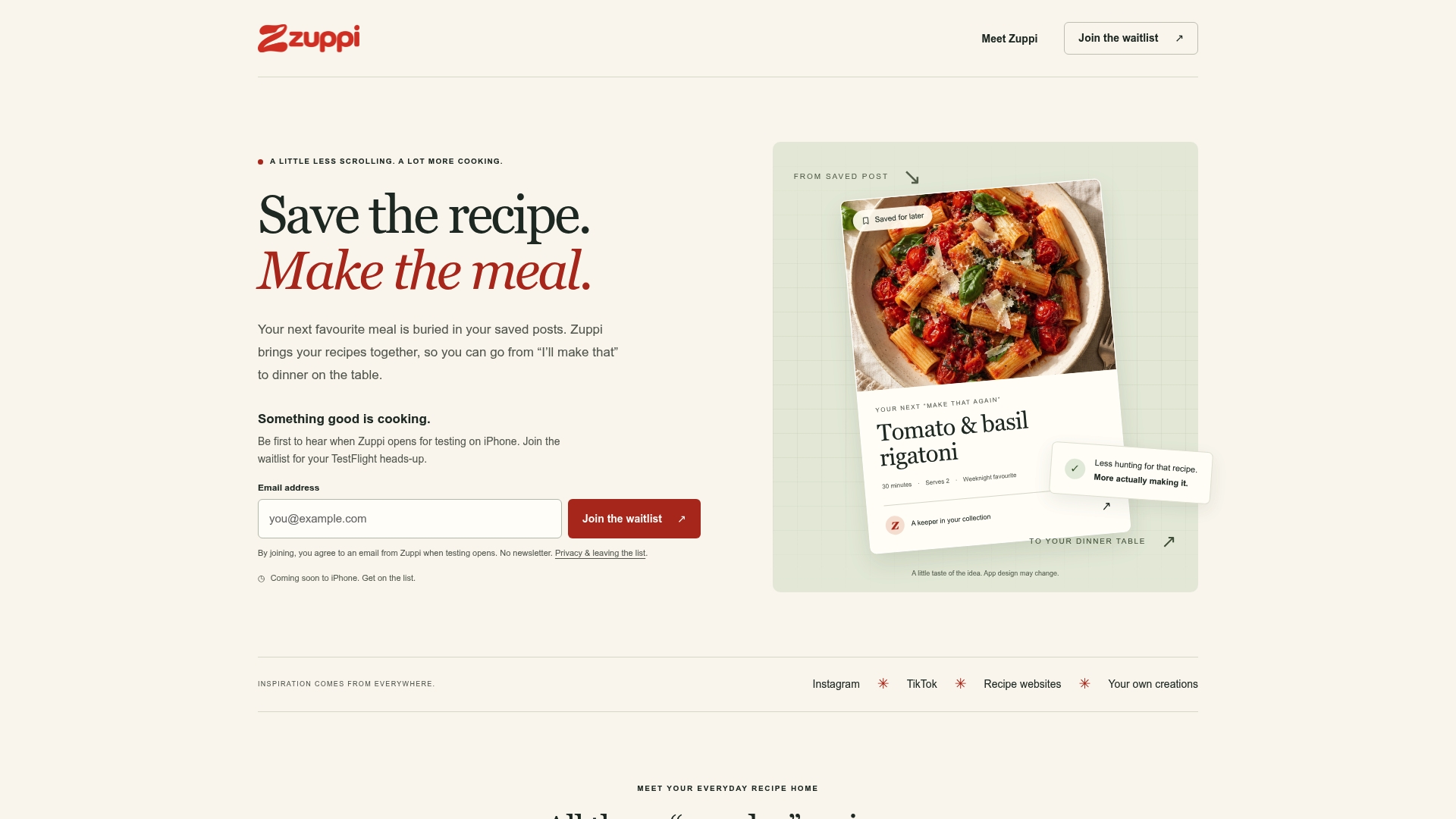
For a first-week scenario, that means picking your two or three starter recipes in an app, letting it consolidate everything into one shopping list sorted by ingredient, and then following step-by-step instructions with built-in timers in a cooking mode while you're running your oven and stovetop in parallel. No ads interrupt the process, and everything stays organized and ready when your prep day rolls around. If that sounds like it would remove a chunk of the mental overhead from your first session, try Zuppi and see how it fits into your routine.
Sources
- Meal Prep Guide • The Nutrition Source
- A Beginner’s Guide to Healthy Meal Prep
- Food storage safety tips
- FDA food safety guidance (document)
FAQ
How do I begin meal prepping?
Pick one mealtime, lunch or breakfast works best for most beginners, choose two or three simple recipes, and set a recurring prep day. Shop once with a list sorted by fridge, freezer, and pantry sections, then cook everything for that single meal in one session.
What is the 3-2-1 meal plan?
This isn't a standardized or widely defined term in food safety or nutrition guidance, so definitions vary depending on where you encounter it. If you've seen it referenced elsewhere, treat it as one blogger's shorthand rather than an established meal-prep framework.
What are the easiest meals to meal prep?
Sheet-pan chicken with roasted vegetables, grain bowls with roasted chickpeas, overnight oats, and mason-jar salads all top the list because they require minimal active cooking time and hold up well for three to five days refrigerated.
Can you lose weight by meal prepping?
Meal prep supports weight management mainly through portion control and reduced reliance on takeout, since prepped meals let you set serving sizes in advance rather than estimating them while hungry. It's a tool that supports a broader eating pattern, not a guaranteed weight-loss method on its own.
How long do prepped meals stay good in the fridge?
Most cooked proteins, grains, and vegetables stay safe for three to four days when refrigerated at 40°F (4°C) or below, with roasted vegetables sometimes stretching to five days depending on the ingredient.