
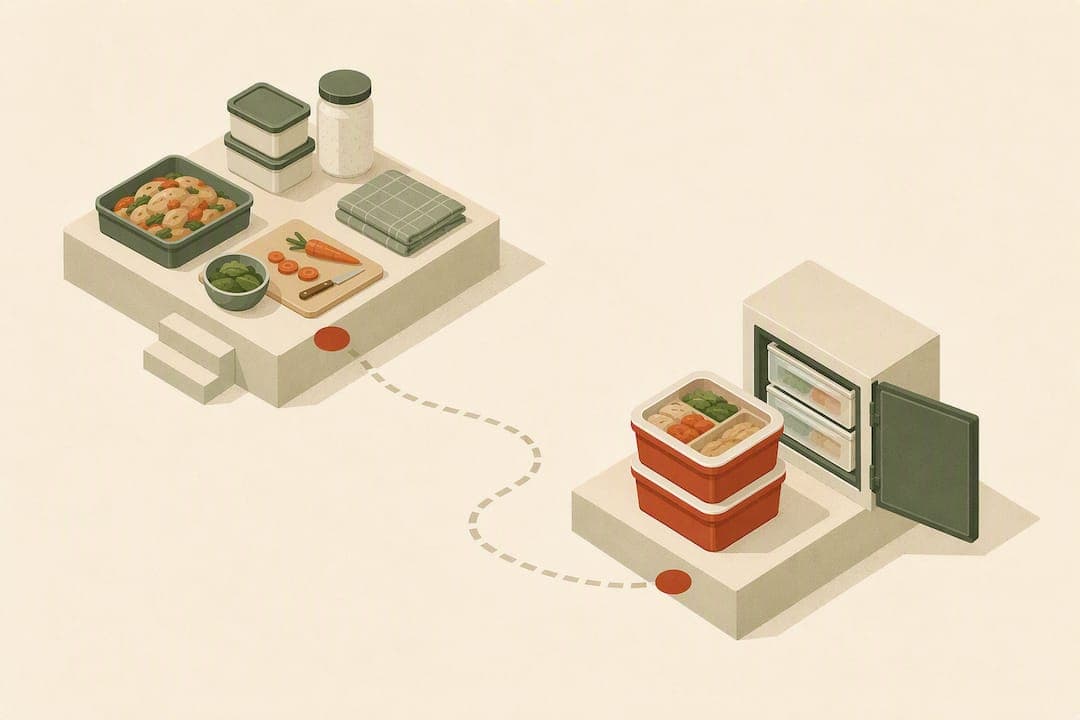
Yes, postpartum meal prep is worth doing, and the timing matters more than the recipes. Start between 30 and 36 weeks of pregnancy, prioritize soups, single-serve proteins, and snacks you can eat one-handed, and aim to bank a few weeks of meals using small "double dinner" sessions rather than one exhausting marathon.
TL;DR:
- Building a freezer stash between 30 and 36 weeks of pregnancy ensures enough nutritious, quick-to-reheat meals without overexerting late in pregnancy.
- Prioritized foods include soups, stews, congee, breakfast burritos, egg muffins, casseroles, and flat-freezing proteins like shredded chicken for versatility and texture retention.
- Label and organize meals by name, date, and reheating instructions, aiming to use most within two to three months to preserve flavor and safety.
- A typical four-week plan involves multiple short sessions, including batch cooking soups, proteins, grains, and breakfast items to avoid long marathons.
- Using tools like Zuppi simplifies recipe management, shopping, and timed cooking, reducing organizational overhead during postpartum recovery.
Table of Contents
- Which Foods Should You Prioritize for Postpartum Meal Prep?
- When Should You Start Building Your Freezer Stash?
- How Do You Store, Label, and Reheat Frozen Meals Safely?
- What Should Your Nursing Station and Snack Stash Include?
- How Do You Batch-Cook Efficiently Without a Full Day in the Kitchen?
- What Does a 4-Week Postpartum Meal Prep Plan Look Like?
- How Does Zuppi Simplify Postpartum Meal Prep?
- What Should You Eat Postpartum for Recovery and Milk Supply?
- Can You Meal Prep Around Vegetarian, Allergy, or Cultural Needs?
- How Do You Balance Meal Prep With Newborn Care and Fatigue?
- A Realistic Perspective on Postpartum Meal Prep
- Keep Your Freezer Stash Recipes Organized With Zuppi
- Sources
- FAQ
Which Foods Should You Prioritize for Postpartum Meal Prep?
Not every dish survives the freezer, and not every dish serves a body that just gave birth and is possibly nursing every two hours. The formats below show up again and again in postpartum meal prep because they solve two problems at once: they reheat without turning mushy, and they meet the nutritional demands of recovery.
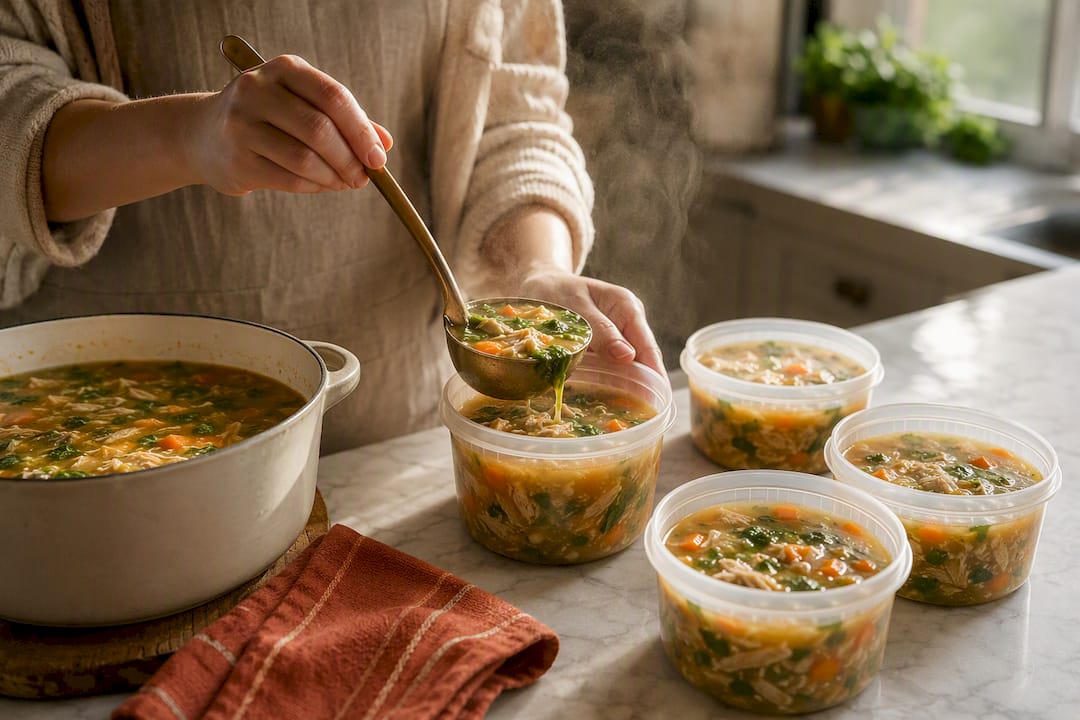
Soups, stews, and congee sit at the top of the list for good reason. They're hydrating, gentle on a digestive system still recalibrating, and easy to sip one-handed while a baby nurses. Traditional postpartum nutrition practices across many cultures lean heavily on warm, soft, broth-based foods for exactly this reason. They also portion beautifully into individual containers, so you're never thawing more than one meal needs.
Breakfast burritos and egg muffins solve a different problem: morning inertia. At 6 a.m. with a newborn, cooking an egg is not happening. Frozen burritos and muffin-tin egg cups microwave in under two minutes and travel well to a nursing chair.
Casseroles and dense grain bakes function as complete meals in a single dish, which matters when you don't have the bandwidth to coordinate a protein, a side, and a vegetable separately. Rice- or quinoa-based bakes hold their texture through freezing far better than pasta does.
Flat-frozen, pre-cooked proteins deserve special mention. Shredding chicken, ground beef, or lentils and freezing them flat in zip bags speeds up thawing dramatically and makes the protein versatile across bowls, wraps, tacos, or a quick stir-fry.
Snack priorities matter just as much as full meals:
- Protein-and-fat combos (hard-boiled eggs, cheese, nut butter) that stabilize blood sugar between feeds
- Room-temperature items that don't require walking to the kitchen at 3 a.m.
- Single-hand foods, since one arm is usually occupied
- Hydration-forward snacks like fruit with high water content, given how much fluid nursing pulls from the body
When Should You Start Building Your Freezer Stash?
Most postpartum nutrition resources point to the same window: 30 to 36 weeks of pregnancy. Earlier than that, energy and mobility are usually still good, but the freezer stash risks aging out before delivery. Later than 36 weeks, swelling, fatigue, and unpredictable early labor make batch cooking a gamble.
Here's a realistic way to pace it without a single exhausting cook day:
- Weeks 30 to 32: Start the double-dinner method. Whenever you make dinner, double the recipe and freeze half in a labeled container. Two or three dinners a week naturally builds six to eight frozen meals by the end of this stretch.
- Weeks 32 to 34: Add one dedicated prep session focused on breakfasts (burritos, egg muffins, baked oatmeal) since mornings tend to be hardest in the first weeks home.
- Weeks 34 to 35: Batch a pot of soup or stew in a large enough quantity to freeze six to eight individual portions.
- Week 36: Do a final inventory. Count servings, fill any gaps with quick dump-and-go bags, and confirm you're at your two to three week target.
If bed rest, a high-risk pregnancy, or plain exhaustion gets in the way, delegation is not a failure of planning. A meal train, a grocery delivery service, or simply asking a partner to handle one station (soups, say, while you handle breakfasts) still gets you to the same stash.
How Do You Store, Label, and Reheat Frozen Meals Safely?
The best freezer stash in the world fails if nobody can identify what's in the bag three weeks later. A few habits prevent that.
- Flat-freeze everything you can. Soups, stews, and sauces frozen flat in gallon bags thaw in a fraction of the time a frozen block does, and they stack like files instead of taking over the whole freezer.
- Label with the meal name, date, and reheat instructions written directly on the bag or container. "Chicken tortilla soup, frozen 2/14, reheat 10 min stovetop" tells a sleep-deprived partner everything they need, no guesswork required.
- Freeze casseroles unbaked when possible. This preserves texture better than baking, cooling, then refreezing, and reheating from frozen at 375°F, covered in foil, for 45 to 60 minutes gets a fresher result.
- Thaw overnight in the fridge when you have the lead time, or use the microwave's defrost setting for same-day needs. Soups can go straight from freezer to stovetop in most cases.
- Plan to use most frozen meals within two to three months for best flavor and texture, though safety extends longer if meals stay solidly frozen the whole time.
What Should Your Nursing Station and Snack Stash Include?
Hunger during breastfeeding doesn't wait for a convenient moment, and it often strikes hardest at 2 a.m. when the last thing you want to do is negotiate a decision. A stocked bedside or nursing-chair station removes that decision entirely.
- Nuts, trail mix, or nut-butter packets that need no utensil and won't spoil at room temperature
- A water bottle with a straw, refilled before every nursing session, since nursing pulls significantly on hydration
- Protein bars or hard cheese wedges that survive hours out of the fridge
- A smoothie puck stash in the freezer (pre-portioned fruit, spinach, and yogurt frozen in muffin tins) that blends into a drinkable meal in under a minute
- Hard-boiled eggs prepped in batches of six, since they hold well in the fridge for a week
Pro Tip: Set up two stations, not one: a fridge/counter station for daytime snacking and a true bedside station stocked only with items that need zero prep. The second one is what actually gets used at 3 a.m.
How Do You Batch-Cook Efficiently Without a Full Day in the Kitchen?
Assembly-line thinking beats cooking one recipe start to finish, especially in the third trimester when standing for hours isn't realistic. Three methods do most of the heavy lifting.
- Dump-and-go freezer bags. Layer raw or partially cooked ingredients (chicken, broth, spices, chopped vegetables) directly into a labeled freezer bag. No cooking happens until the bag goes into a crockpot or Instant Pot on the day you need it.
- Crockpot kits. Same concept, built specifically around slow-cooker recipes. Label the bag with the cook time and setting so anyone in the house can start it.
- Flat-freezing proteins and grains separately. Cook a large batch of shredded chicken, ground turkey, rice, or quinoa once, then flat-freeze in individual or family-sized portions. Mix and match into different meals later instead of committing every protein to one dish.
A few shortcuts cut real time off any of these methods:
- Buy a rotisserie chicken instead of cooking one from scratch
- Use canned beans instead of soaking and cooking dried ones
- Buy pre-chopped onion, garlic, and squash from the produce section
- Stick to recipes with high liquid content (soups, curries, chilis) since they hold texture through freezing far better than dry roasted dishes or delicate pasta
Not every recipe survives the freezer gracefully. Cream-based sauces tend to separate, and pasta gets mushy on reheat. If you love a cream soup, swap in a roux or blended-vegetable thickener instead, and slightly undercook any pasta before freezing so it doesn't turn to paste during reheating.
What Does a 4-Week Postpartum Meal Prep Plan Look Like?
A concrete target makes this whole project less abstract. Here's what two to three weeks of meals looks like in real numbers:
- 4 soups or stews × 8 servings = 32 individual portions
- 12 to 18 breakfast burritos or egg muffins
- 2 casseroles, cut into 6 to 8 servings each
- 1 batch of flat-frozen shredded protein (roughly 6 to 8 cups)
- 20 to 24 smoothie pucks or snack portions
Getting there over four weeks, with one 3 to 4 hour session and several smaller double-dinner nights, looks like this:
- Session one (soup focus, 60 minutes): Cook two large pots of soup back to back while doing other tasks between stirs. Portion into 16 containers once cooled.
- Session two (protein and grain station, 45 to 60 minutes): Cook and shred two proteins, cook a double batch of rice or quinoa, flat-freeze both.
- Session three (breakfast batch, 45 minutes): Assemble and bake egg muffins or burritos assembly-line style, wrap individually, freeze on a tray before bagging.
- Session four (casserole and cleanup, 60 to 90 minutes): Assemble two unbaked casseroles for the freezer, do a final inventory, and label everything with meal name, date, and reheat instructions.
Between formal sessions, keep doubling regular dinners and freezing the extra half. Once the baby arrives, rotate the oldest meals to the front of the freezer and replace what gets used with quick dump-and-go bags whenever energy allows, so the stash doesn't just deplete, it stays functional for months.
How Does Zuppi Simplify Postpartum Meal Prep?
Scaling recipes, hunting down that one soup you saved from a video three months ago, and building a shopping list by hand adds friction exactly when you have the least capacity for it. Zuppi consolidates recipes saved from links, screenshots, and personal notes into one place, then turns them into an organized shopping list and a step-by-step Cook Mode with built-in timers.
For postpartum batch sessions specifically, that means managing recipes and meal plans efficiently in one place and using timers during cooking to keep track of multiple dishes simultaneously.
Recipe management overhead is a quiet reason freezer stashes stall out after the first week. A tool built around saving, organizing, and executing recipes removes one more obstacle between "good intention" and a freezer that's actually stocked.
What Should You Eat Postpartum for Recovery and Milk Supply?
Postpartum is a period of unusually high metabolic demand, and registered dietitians note that many new parents underestimate it, which leaves them running on processed snacks instead of meals that actually rebuild tissue and support lactation. Research cited by postpartum nutrition resources suggests 57% of postpartum individuals fail to meet basic caloric intake in the early weeks, often because eating gets deprioritized during round-the-clock newborn care.
Protein and iron-rich foods matter more than usual right now. Red meat, lentils, and eggs help rebuild blood volume lost during delivery, while healthy fats (avocado, olive oil, fatty fish) support hormone production and recovery. If you're breastfeeding, calorie needs climb further, and a practical goal is eating something with both protein and fat every two to three hours rather than waiting for three big meals.
Whole grains and fiber deserve a specific mention. Fiber helps steady blood sugar and energy through the kind of fragmented, unpredictable sleep that defines the newborn stage, which makes oats, brown rice, and whole grain bread better freezer-stash staples than their refined counterparts.
Hydration compounds all of this. Nursing draws heavily on fluid reserves, and a body recovering from birth needs more water than usual regardless of feeding method. Building water intake into the same routine as eating, a glass every time you sit down to nurse or eat a snack, works better than trying to remember it separately.
Can You Meal Prep Around Vegetarian, Allergy, or Cultural Needs?
Every method described so far adapts to dietary restrictions without much extra effort. The formats matter more than any specific ingredient.
For vegetarian family meal prep, lentil and bean-based soups replace meat-based stews with equal or better freezer performance, since legumes actually hold their texture through freezing more reliably than some cuts of meat. Vegetable-forward grain bakes built on quinoa, chickpeas, and roasted vegetables cover the casserole category. Egg muffins remain vegetarian by default and only need a swap for plant-based sausage or extra vegetables if you're avoiding meat entirely.
Allergies require a bit more label discipline than flavor adjustment. If a household is managing a dairy or nut allergy, batch cooking actually helps rather than hurts, since you control every ingredient instead of relying on takeout or well-meaning gift meals with unknown contents. Label bags with allergen flags in addition to meal name and date, especially if a meal train or delegated helper will be cooking alongside you.
Cultural dietary needs, whether religious dietary laws, specific spice profiles, or family traditions around what a new mother should eat, fit the same freezer-friendly formats. Congee, broths, and stews appear across nearly every food culture's postpartum traditions for a reason: they're gentle, warm, and easy to eat one-handed. Swap the protein, the spice blend, or the grain, and the underlying method, the timing, the batch-cooking, the flat-freezing, stays identical.
How Do You Balance Meal Prep With Newborn Care and Fatigue?
The honest answer is that you don't do it all at once, and trying to is what causes people to quit meal prep entirely by week two of pregnancy's third trimester. Small sessions beat marathon days almost every time, both because your body has less capacity for standing and lifting late in pregnancy, and because a three-hour cook day sounds productive but often leaves nothing left for the following week.
Building in double dinners on nights you're already cooking anyway removes the "extra task" framing. You're not adding a chore, you're doubling one you were doing regardless.
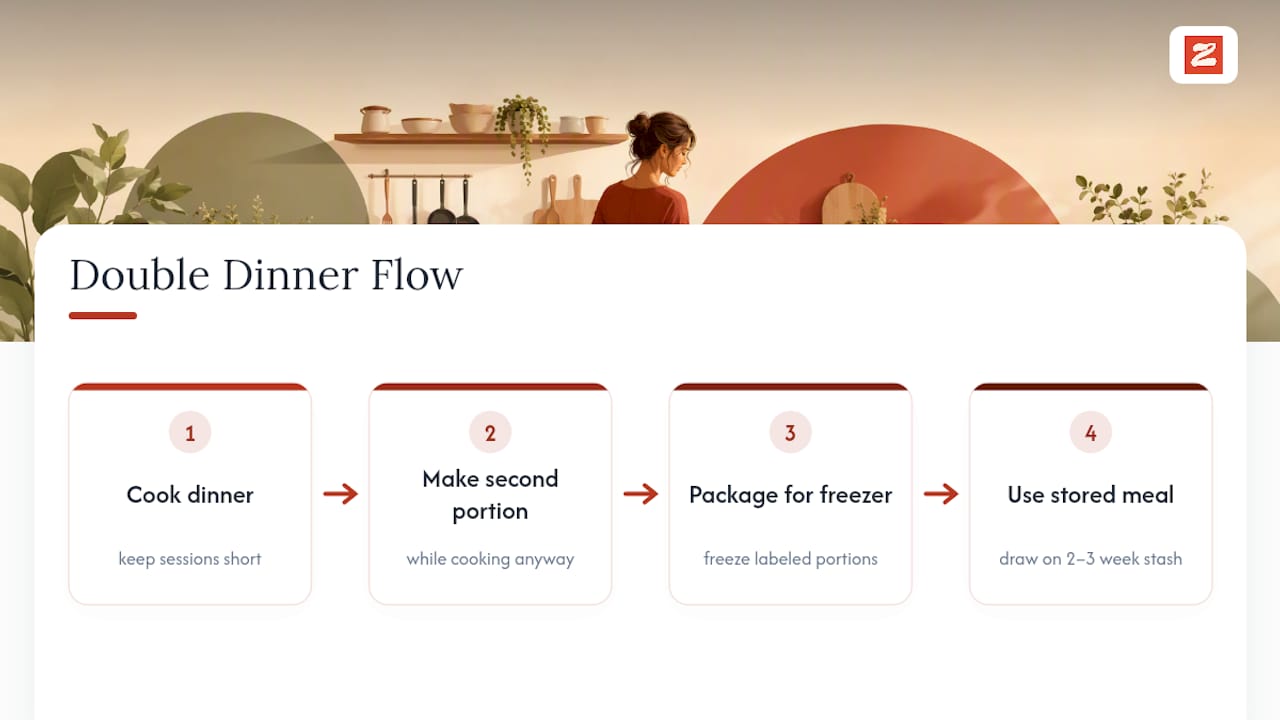
Fatigue also means accepting that some weeks you'll add zero meals to the freezer, and that's fine as long as the weeks before delivery added enough of a buffer. A two to three week stash exists precisely to cover the stretch when meal prep isn't happening at all.
Delegation matters here more than most people admit upfront. Assigning specific, concrete tasks (one person is in charge of the meal train sign-up sheet, another brings groceries on a set day) turns vague offers of help ("let me know if you need anything") into meals that actually appear.
A Realistic Perspective on Postpartum Meal Prep
The freezer stash doesn't need to be beautiful, balanced across every food group, or even fully complete by delivery day. What actually moves the needle is having a handful of meals that require zero decisions and minimal cleanup during the exact weeks when both are hardest to manage.
Ask for specific help, not general help. Tell people "bring soup on day 10" instead of "let me know if you need anything," and schedule your meal train to run heaviest in weeks two and three, when outside help typically drops off just as fatigue peaks. Recovery, not culinary achievement, is the actual goal.
— Nathan
Keep Your Freezer Stash Recipes Organized With Zuppi
Building a two to three week freezer stash means juggling recipes from a dozen different places: a link a friend texted you, a screenshot from a recipe video, a handwritten note from your mother. Zuppi is built for exactly that kind of scattered collection, pulling every saved recipe into one place, turning your batch-cook list into an organized shopping list grouped by ingredient, and running Cook Mode timers so you can manage a multi-station prep day without losing track of what's on the stove.
If you're heading into your third trimester and starting to plan freezer meals, save your soup, casserole, and breakfast recipes in Zuppi before your next prep session, build your shopping list in one tap, and let Cook Mode keep time while you focus on everything else a batch-cooking day demands.
Sources
Timing guidance on the 30 to 36 week start window comes from Today's Parent. Provisioning and double-dinner tactics are drawn from Phoenix Health's postpartum resource center. Registered dietitian guidance on nutrient density comes from The Food Doula, and fiber recommendations come from Harvard's Nutrition Source.
- Postpartum meal prep timing guidance — Today's Parent
- Postpartum meal prep provisioning guide — Phoenix Health
- RD guidance on postpartum meal prep — The Food Doula
- Fiber recommendations and benefits — The Nutrition Source, Harvard T.H. Chan School of Public Health
FAQ
When Should You Start Postpartum Meal Prep?
Start between 30 and 36 weeks of pregnancy to build a two to three week freezer stash without overloading yourself in late pregnancy.
What Is the 5 5 5 Rule in Postpartum?
The 5 5 5 rule is a recovery guideline about gradually expanding your physical range, reinforcing why a stocked freezer matters most in the early postpartum window.
Is Postpartum Meal Prep Worth It?
Yes. It directly addresses the gap many new parents face meeting basic caloric needs in the early weeks, and a stash of soups, proteins, and grab-and-eat breakfasts removes decision-making during the period when energy is lowest.
What Kind of Meals Are Best After Giving Birth?
Soups, stews, and congee top the list for hydration and easy digestion, alongside breakfast burritos, egg muffins, and casseroles that reheat without losing texture. Flat-frozen shredded proteins add versatility across multiple quick meals.
Can Zuppi Help With Postpartum Meal Prep?
Zuppi organizes saved recipes, builds a shopping list automatically, and runs Cook Mode timers during batch-cooking sessions, which maps directly onto the save, plan, shop, and cook workflow this kind of meal prep requires.