
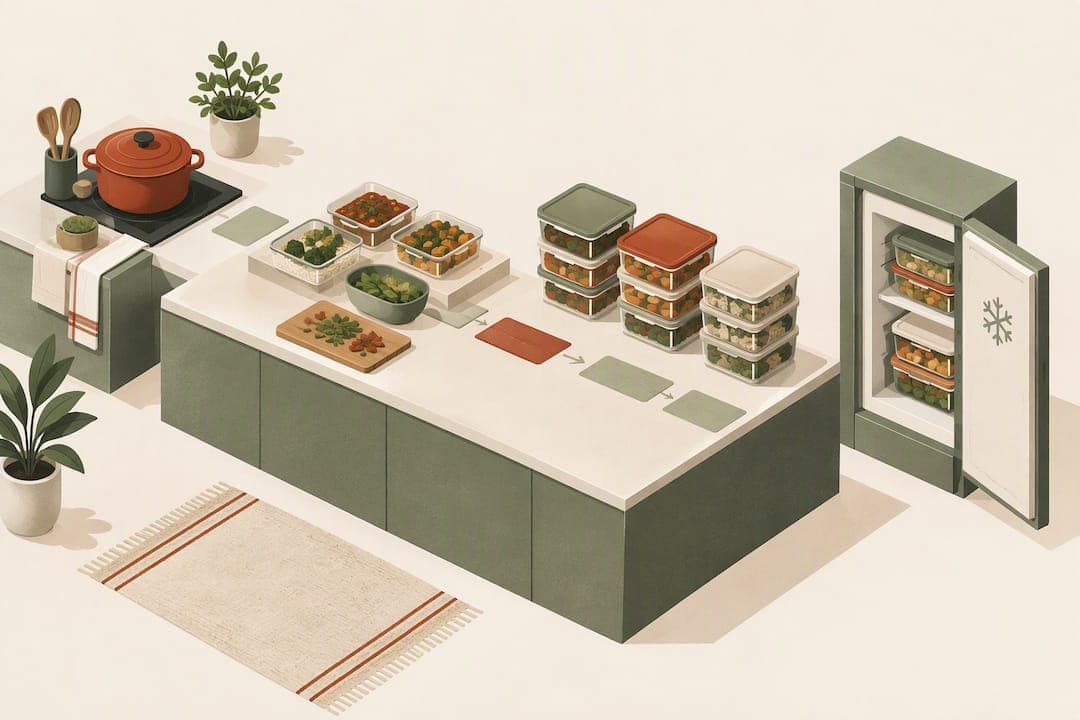
Yes, Sunday meal prep can safely cover most of your week when you follow three rules: refrigerate cooked food within two hours, eat refrigerated portions within three to four days, and freeze anything beyond that window. The practical plan is simple. Cook proteins, grains, and roasted vegetables, portion them into shallow containers, label everything with the date, refrigerate what you'll eat within a few days, and freeze the rest.
TL;DR:
- Most prepped foods are safe for up to four days in the refrigerator if cooled and stored properly, with longer shelf life achievable through freezing.
- Proteins like roasted chicken thighs, baked tofu, and hard-boiled eggs last three to four days, while grains such as rice and quinoa also keep well refrigerated for the same period.
- Safety relies on refrigerating within two hours of cooking and using shallow containers to cool food quickly, especially for high-risk items like rice.
- Texture issues can be minimized by storing dressings separately, layering foods properly, and refreshing meals with quick reheats or fresh toppings.
- Batch cooking often involves simultaneously roasting vegetables, cooking grains, and preparing proteins, all within a 90-minute window, with double-making grains and veggies as a time-saving tip.
Table of Contents
- What Makes Sunday Meal Prep Worth the Time?
- What Should You Actually Cook on Sunday?
- How Do You Structure a 90-Minute Sunday Prep Session?
- How Long Does Prepped Food Actually Stay Safe?
- How Do You Keep Prepped Meals From Getting Soggy?
- How Zuppi Turns Sunday Prep Into One Organized Session
- How Much Protein and Portion Size Should Each Meal Have?
- How Do You Meal Prep on a Budget?
- Can You Meal Prep for Vegetarian, Vegan, or Gluten-Free Diets?
- How Do You Reheat Prepped Meals Safely?
- A Few Honest Thoughts on Making This Stick
- Make Sunday Prep One Session Instead of Five Decisions
- Sources
- FAQ
What Makes Sunday Meal Prep Worth the Time?
Sunday meal prep pays off in ways that are easy to underestimate until you try it for a few weeks straight. You stop making the 6 p.m. decision about what to eat, which is often the decision that ends in takeout. You waste less produce because it gets cooked before it wilts. And you spend less overall, since a planned grocery list beats impulse shopping almost every time.
Before you plan a single meal, do a quick audit. The USDA MyPlate guidance recommends checking your fridge, freezer, and pantry first, then writing your weekly meals around what you already have. This alone cuts waste and grocery costs.
From there, use a simple framework:
- Decide how many meals you actually need (five lunches, three dinners, whatever your week looks like).
- Block off a realistic prep window. Sixty to ninety minutes is enough for most households.
- Pick two or three proteins, two grains, and a handful of vegetables you can mix and match all week.
You'll see planning systems online like the 3-3-3 method (three proteins, three grains, three vegetables). These help with variety, but they're organizing tools, not food-safety guidelines. Safety comes from the storage rules below, not from how many categories you cook.
What Should You Actually Cook on Sunday?
The best Sunday meal prep plan is built around components that hold up, not fragile finished dishes that fall apart by Wednesday.
Proteins. Roast chicken thighs stay moist for 3 to 4 days refrigerated. Baked tofu holds texture almost as long if you press it well before cooking. Hard-boiled eggs keep about a week in the shell. Slow-cooked beef, like a chuck roast or pulled pork, actually improves after a day and reheats well through the storage window.
Grains and legumes. Farro, quinoa, and brown rice all keep 3 to 4 days refrigerated. Cool them spread out on a sheet pan for a few minutes before boxing them up, which speeds cooling and prevents a gummy texture. Lentils behave the same way and freeze exceptionally well if you want a head start on next week.
Vegetables. Sheet-pan roasted vegetables (broccoli, carrots, peppers, sweet potato) are the workhorse of any sunday batch cooking session. Keep crunchy raw elements, like shredded cabbage or sliced cucumber, in separate containers so they don't turn limp against warm grains. Frozen vegetables are a legitimate backup for nights when fresh produce runs out.

Sauces and dressings. Always store these separately. Dressing sitting on greens for four days is the single fastest way to ruin a good salad.
Four combos that hold up all week:
- Grain bowl: farro, roasted vegetables, chicken thighs, tahini dressing added at serving.
- Salad bowl: greens packed dry, protein and toppings on top, dressing on the side until you eat.
- Soup or stew: a big pot of chili or vegetable soup, which often tastes better the next day and freezes well.
- Stir-fry assembly: pre-chopped vegetables and cooked protein that hit a hot pan for five minutes before serving.
How Do You Structure a 90-Minute Sunday Prep Session?
The trick to efficient meal prep for work lunches is treating your kitchen like it has two ovens and three hands, even when it doesn't. A tight sequence keeps everything moving instead of leaving you standing around while a pot simmers.
- Minutes 0 to 10: Preheat the oven, pull out ingredients, and set your grains to boil.
- Minutes 10 to 30: Roast vegetables on one sheet pan while grains cook. This is where a sheet-pan-plus-one-pot combo saves the most time.
- Minutes 30 to 50: Cook your protein, whether that's searing chicken thighs, baking tofu, or browning ground beef. Whisk dressings and sauces while things cook.
- Minutes 50 to 70: Portion everything into containers, spreading hot food into shallow containers so it cools quickly.
- Minutes 70 to 90: Label containers with the contents and date, load the fridge and freezer, and wipe down surfaces while pans soak.
Running two cooking methods at once is the single biggest time saver here. A recipe app with built-in timers makes this far less stressful, since you can set a roasting timer and a stovetop timer side by side without losing track of either.
Pro Tip: Cook double the grains and double the roasted vegetables, but keep proteins in smaller batches. Vegetables and grains reheat almost perfectly, while some proteins (fish especially) lose texture fast.
How Long Does Prepped Food Actually Stay Safe?
Cooked meat, poultry, and other leftovers stay safe in the refrigerator at 40°F (4°C) or below for 3 to 4 days. Anything you won't eat by day four needs to go in the freezer, not sit in the fridge hoping for the best.
Timing matters just as much as temperature. Perishable food needs to be refrigerated within two hours of cooking, or within one hour if your kitchen is hotter than 90°F. That two-hour window is the boundary of the "danger zone," the range between 40°F and 140°F where bacteria multiply fastest. Shallow containers, roughly two inches deep, cool food faster and shrink the time your prep spends in that zone.
Here's a fridge-freezer split that covers a full five-day work week without stretching the safety rules:
- Refrigerate Monday through Wednesday portions right after cooking.
- Freeze Thursday and Friday portions on Sunday while they're at peak freshness.
- Move the Thursday portion from freezer to fridge Wednesday night so it thaws safely overnight.
One ingredient deserves special caution: cooked rice can carry heat-resistant spores that survive cooking, so cool it quickly and either eat it within a day or freeze individual portions rather than holding it in the fridge for the full four days.
How Do You Keep Prepped Meals From Getting Soggy?
Texture loss is the main reason people give up on meal prep, and it's almost always fixable with better packing habits, not better cooking.
- Keep dressings, sauces, and crunchy toppings in small separate containers and combine only at serving time.
- Line containers with a paper towel under sliced fruit or leafy greens to absorb excess moisture.
- Layer hot components away from crisp ones. Steam from warm rice will wilt lettuce sitting right next to it.
- Revive flavor at serving with a squeeze of citrus, a scatter of fresh herbs, or a quick reheat in a hot pan instead of the microwave.
- If a grain or rice portion won't get eaten within 3 to 4 days, freeze it instead of pushing the fridge window.
Pro Tip: A folded paper towel inside a container of cut vegetables or salad greens genuinely extends crispness by a day or two. It sounds too simple to matter, but it works.
How Zuppi Turns Sunday Prep Into One Organized Session
Half the friction in office lunch meal prep isn't the cooking, it's hunting down the recipe you saved three weeks ago in a screenshot, a text message, or a bookmarked link you can't find again. Some recipe management apps consolidate all of that into one place.
In practice, a Sunday session might look like this: save four recipes from links and screenshots during the week, then merge their ingredients into a single shopping list so you're not buying three separate bags of spinach. Tag each recipe by prep day, then use timers to run the oven and stovetop at once without losing track of either.
- Save recipes from a variety of sources in one organized place.
- Auto-generate a consolidated grocery list from multiple recipes.
- Assign recipes to prep days or tasks.
- Run cook modes with timers to coordinate multiple dishes.
How Much Protein and Portion Size Should Each Meal Have?
Portion control matters more in meal prep than in everyday cooking, because you're deciding your serving size once, on Sunday, for five meals in advance. Overfilled containers lead to overeating simply because the food is already there. Underfilled ones send you straight to the vending machine by Wednesday.
A useful default is to build each container around a fist-sized portion of protein, a cupped-hand portion of grains, and the rest filled with vegetables. This isn't a rigid rule, but it keeps meals balanced without requiring a food scale for every lunch.

Batch cooking also makes it easy to lose track of what's actually in a meal, especially with sauces and dressings that carry hidden calories. Portioning dressing into small side containers, rather than mixing it into the whole batch, gives you control over exactly how much goes on your plate each day.
If your goal is weight management, prep proteins and vegetables in bulk but portion carbs individually, since grains are the easiest component to unintentionally overeat straight from a big container. If your goal is muscle maintenance or athletic performance, lean the other way and make sure protein portions stay consistent across every container rather than shrinking as the week goes on and the container looks less full.
Weigh or measure your first few batches until eyeballing portions becomes second nature. Most people find that after two or three weeks of consistent Sunday meal prep, they can build a balanced container by sight alone.
How Do You Meal Prep on a Budget?
Sunday meal prep and grocery budgeting go hand in hand, since a written plan is the single biggest defense against impulse purchases. Shop with a list built from what you're actually cooking that week, not a general wander through the store.
Buy proteins in bulk when they're on sale and freeze what you won't cook immediately. Whole chickens, family packs of chicken thighs, and bulk dried beans or lentils all cost less per serving than pre-portioned versions. Frozen vegetables are often cheaper than fresh and just as nutritious, which makes them a smart backup for stir-fries and soups.
Lean on a few budget anchors: eggs, canned beans, rice, and seasonal produce are consistently among the cheapest sources of protein and volume in any grocery store. A pot of lentil soup or a tray of baked eggs can stretch a tight grocery budget across several lunches for just a few dollars per serving.
Buying a whole cabbage or a bag of carrots instead of pre-cut versions costs a fraction as much and takes only a few extra minutes of knife work during your Sunday session. That's a trade worth making almost every week.
Doubling a family dinner recipe is one of the most efficient budget moves available: half becomes tonight's dinner, half becomes tomorrow's lunch, and you only shop and cook once for two meals.
Can You Meal Prep for Vegetarian, Vegan, or Gluten-Free Diets?
Sunday meal prep adapts to almost any dietary pattern, since the underlying structure, proteins, grains, vegetables, and sauces, stays the same no matter what fills each category.
For vegetarian or vegan prep, swap chicken and beef for baked tofu, marinated tempeh, or a big pot of lentils or chickpeas. These hold up in the fridge just as well as meat and often freeze better. Nutritional yeast, tahini, and a well-stocked spice rack help keep plant-based bowls from tasting repetitive by Thursday.
For gluten-free prep, swap wheat-based grains for quinoa, rice, or gluten-free oats, and double-check sauces and dressings, since soy sauce and some bottled dressings contain wheat-based thickeners.
For low-carb or keto prep, shift the ratio toward proteins and roasted or raw vegetables, and skip the grain component in favor of cauliflower rice or extra greens.
For dairy-free needs, swap cream-based sauces for olive oil, tahini, or coconut-milk-based dressings, which also tend to hold up better across several days than dairy-based ones.
The safety rules don't change based on diet. A vegan lentil stew still needs to hit the fridge within two hours and get eaten within 3 to 4 days, the same as a beef stew.
How Do You Reheat Prepped Meals Safely?
Reheating is where a lot of careful Sunday work gets undone, usually by reheating too slowly or too many times. Aim to reheat leftovers to an internal temperature of 165°F (74°C) throughout, and reheat each portion only once.
Portioning meals into single-serving containers before freezing or refrigerating avoids the common mistake of reheating a whole batch, eating part of it, and putting the rest back for later. That cycle of reheating and re-cooling gives bacteria repeated chances to grow.
Microwaves reheat unevenly, so stir food halfway through and let it rest a minute before eating, especially with dense items like rice or stew. For food you want to taste freshly cooked, a hot skillet or oven does a better job than a microwave at restoring texture, particularly for roasted vegetables and grain bowls that have gone soft in the fridge.
If a portion smells off, looks discolored, or has been sitting past the 3 to 4 day window, don't taste-test it to decide. Toss it and move on.
A Few Honest Thoughts on Making This Stick
The people who keep up with Sunday meal prep long term aren't the ones running four-hour marathon sessions with color-coded labels. They're the ones who settle into a small, boring, repeatable routine: the same handful of proteins, the same grains, minor rotation on vegetables. If you want ideas or accountability, meal-prep communities on Reddit and Facebook are full of real people sharing what actually works on a Tuesday night, not just what photographs well. Consistency beats ambition here almost every time.
— Nathan
Make Sunday Prep One Session Instead of Five Decisions
Zuppi is the alternative to juggling screenshots, sticky notes, and half-remembered links for your weekly cooking plan. It keeps every recipe you save, from a link, a screenshot, or your own notes, in one organized, ad-free place, and it merges ingredients from multiple recipes into a single shopping list automatically.
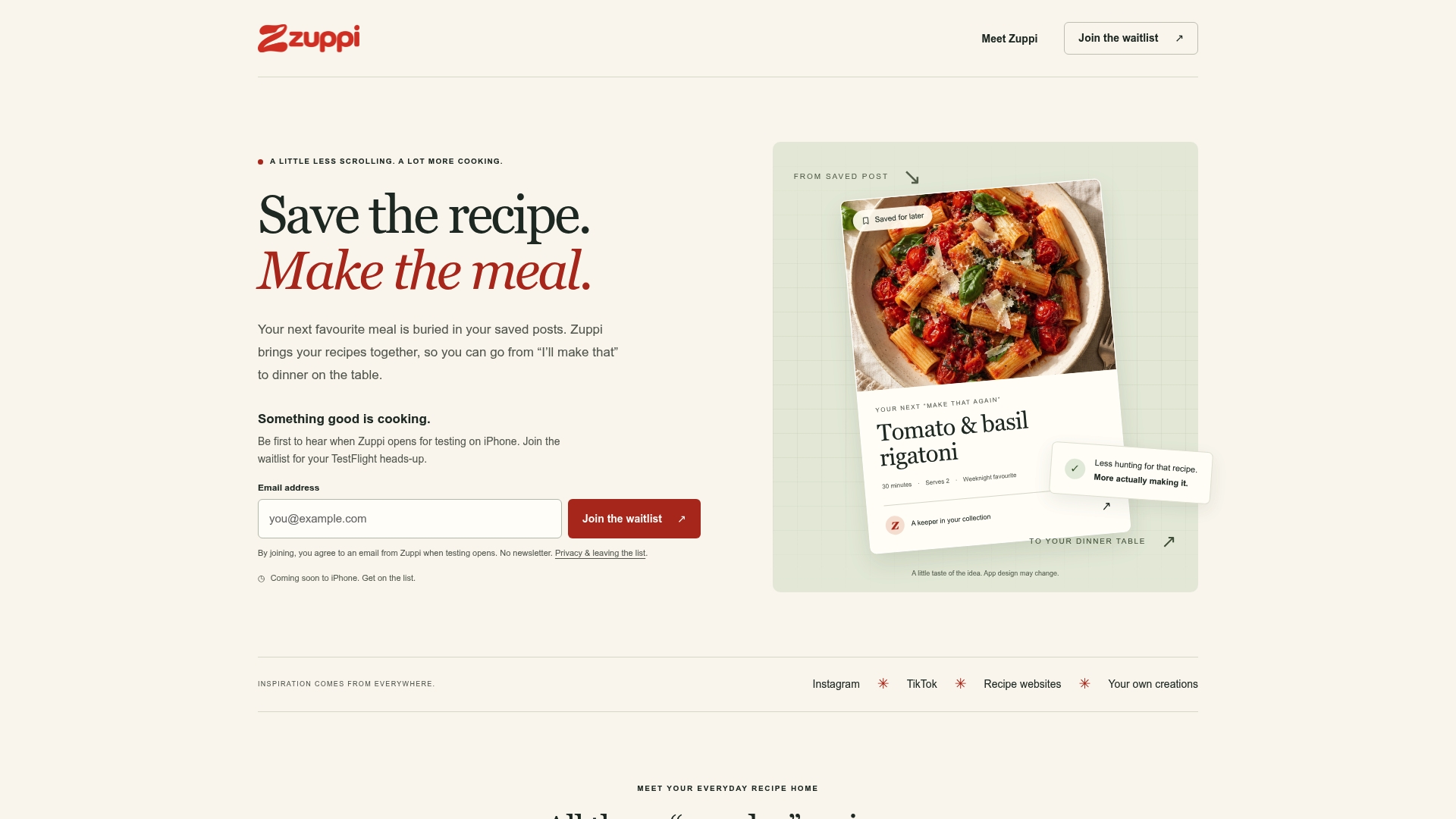
Picture a Sunday where you pick your four meals for the week in Zuppi, generate one combined grocery list before you leave for the store, and then run Cook Mode's built-in timers while your sheet pan roasts and your grains simmer at the same time. No more digging through your camera roll mid-recipe to find the next step. If that sounds like the Sunday you'd rather be having, start with Zuppi and build your first weekly plan today.
Sources
FAQ
What Are Some Good Meal Prep Ideas for Sundays?
Focus on components rather than finished dishes: a roasted protein, a sturdy grain, roasted or raw vegetables, and a sauce stored separately. Grain bowls, soup or stew, and salad bowls with dressing on the side all hold up well through midweek without going soggy.
What Is the 3-3-3 Rule for Meal Prep?
The 3-3-3 method suggests picking three proteins, three grains or starches, and three vegetables to mix and match all week for variety. It's a planning tool, not a food-safety rule, so you still need to follow the standard fridge and freezer time windows regardless of which system you use.
Can You Meal Prep on Sunday for the Entire Week?
Yes, with a fridge-freezer split. Refrigerate the portions you'll eat Monday through Wednesday, since cooked food stays safe for 3 to 4 days at 40°F or below, and freeze Thursday and Friday portions on Sunday to keep them fresh until later in the week.
How Do You Meal Prep on a Tight Weekly Food Budget?
Build your grocery list around cheap, versatile staples like eggs, canned beans, rice, lentils, and seasonal produce, and buy proteins in bulk when they're on sale. Doubling a dinner recipe so half becomes tomorrow's lunch is one of the most efficient ways to stretch a limited grocery budget without extra shopping trips.
Can Zuppi Help Me Plan My Sunday Meal Prep?
Zuppi lets you save recipes from links, screenshots, or your own notes and combine them into one consolidated shopping list for the week. Its Cook Mode timers help you coordinate multiple dishes during a single Sunday prep session instead of juggling separate kitchen timers.